
Industrial Water Treatment: What Businesses Need to Know Before Choosing a System
Wolgan Engineering Team
Water Treatment Specialists
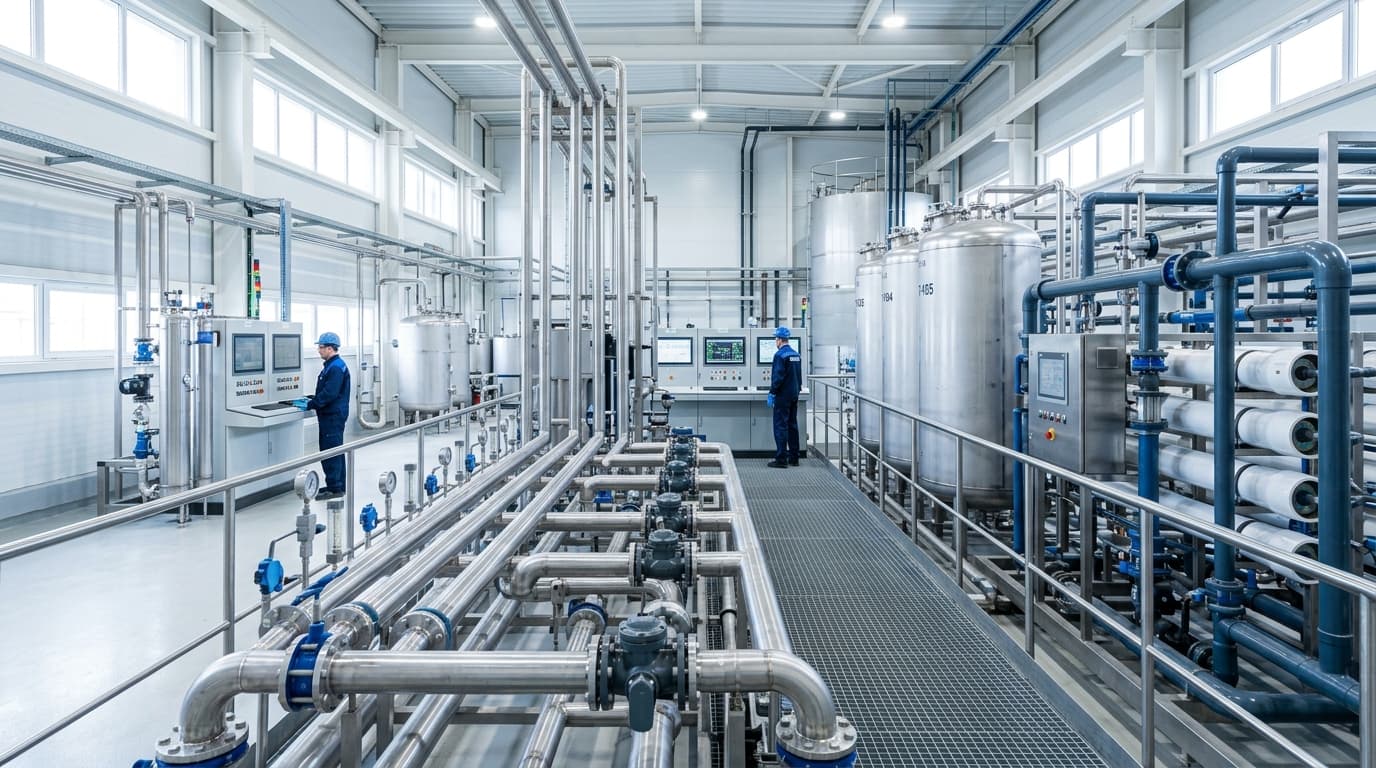
Industrial water quality can affect equipment, processes and operations, as well as the quality required for the intended application. Choosing a suitable water treatment system should therefore begin with understanding the water source, the required treatment outcome and how the treated water will be used.
The right treatment approach depends on several factors, including feed water quality, required treated-water quality, flow rate, operating conditions, site requirements and the intended application. There is no single treatment system that is suitable for every facility.
What Is Industrial Water Treatment?
Industrial water treatment refers to processes used to improve or control water quality for specific industrial, commercial or institutional applications. Depending on the application, treatment may involve:
- Filtration
- Reverse osmosis (RO) systems
- Demineralisation
- Sewage treatment plants (STP)
- Effluent treatment plants (ETP)
- Greywater treatment and recycling
- Chemical dosing and water conditioning
- Oily-water treatment
- Other specialised treatment processes
The appropriate combination depends on the characteristics of the incoming water and the quality required from the treated water.
Why Water Analysis Should Come First
One of the most important steps in selecting a treatment system is understanding the water that needs to be treated. A comprehensive water analysis can provide information about parameters that may affect treatment design, such as:
- Total dissolved solids (TDS)
- pH and alkalinity
- Hardness (calcium and magnesium)
- Conductivity
- Suspended solids and turbidity
- Organic loading (BOD / COD)
- Specific contaminants (chlorides, sulfates, silica, iron)
- Temperature
- Other application-specific parameters
The relevant parameters depend on whether the system is treating potable water, process water, wastewater, cooling water, boiler water or another application. Without sufficient information about the feed water, it can be difficult to determine which treatment stages are actually required.
Capacity Is Another Important Consideration
Treatment systems need to be designed around the required flow and operating pattern.
How Much Water Is Required?
A system supplying a small commercial application will have different requirements from one serving a large industrial facility. Peak demand can also differ from average demand, so storage capacity and operating patterns may need to be considered during design.
Is Demand Continuous or Intermittent?
The way a facility uses water can influence the treatment-system design. A facility operating continuously may have different requirements from one with intermittent or highly variable demand. Understanding when and how much water is needed helps define the required capacity and operating approach.
What Quality Is Required?
The required treated-water quality depends on how the water will ultimately be used. Water intended for a particular industrial process may have very different requirements from water used for general utility purposes. Defining the end use early in the design process helps determine which treatment processes may be appropriate.
Common Industrial Water Treatment Technologies
Filtration
Filtration can be used to reduce suspended particles and other materials, depending on the selected media and system configuration. The appropriate filtration method depends on the characteristics of the feed water and the treatment objective.
Reverse Osmosis
Reverse osmosis uses a semi-permeable membrane to separate dissolved substances from water. RO performance depends on factors such as feed-water characteristics, operating pressure, temperature, membrane selection and pretreatment. Because feed-water conditions vary between sites, RO systems need to be considered in the context of the specific water source and treatment requirements. Learn more about preventing issues in our guide on RO membrane scaling causes and prevention.
Sewage and Wastewater Treatment
Wastewater treatment systems are designed around the characteristics of the wastewater and the required treated-effluent quality. A treatment system may include several physical, biological or chemical stages depending on the application. The appropriate process configuration should be determined from the wastewater characteristics, treatment objectives and applicable project requirements. For more details, explore our guide on ETP vs STP wastewater systems.
Chemical Treatment
Chemical treatment programmes can be used for applications such as cooling water, chilled-water and boiler-water systems. The appropriate treatment programme depends on the water chemistry, equipment and operating conditions. Learn more about available programmes on Wolgan's Chemical Solutions service and read our guide on industrial water treatment chemicals and dosing.
Why Pretreatment Matters
Pretreatment is often an important part of an industrial water treatment system. Depending on the feed water, pretreatment may be used to reduce suspended solids, hardness, chlorine or other factors that could affect downstream equipment.
For membrane-based systems, appropriate pretreatment can be particularly important for managing fouling and scaling risks. The exact pretreatment arrangement should be determined from the water analysis and system requirements rather than selected as a standard package for every application.
Operation and Maintenance Should Be Considered During Design
A water treatment system is not simply an installation that can be left unattended after commissioning. Depending on the system, operators may need to monitor:
- Water quality parameters
- Pressure and flow differentials
- Chemical dosing rates
- Filter and cartridge condition
- Membrane performance and normalized flux
- Equipment condition (pumps, blowers, instruments)
- Cleaning-in-place (CIP) and servicing schedules
Maintenance requirements vary considerably between different treatment systems. A practical design should therefore consider not only the initial installation, but also how the system will be operated, monitored and maintained over time. Wolgan provides dedicated Operation & Maintenance (O&M) and AMC contracts to ensure long-term plant stability.
What Information Should You Prepare Before Requesting a Quotation?
If you are planning an industrial water treatment project, preparing the following information helps engineering teams define the requirement accurately:
- Feed-water analysis report
- Required treatment capacity (m³/day or m³/hr)
- Intended application of the treated water
- Target treated-water quality standards
- Existing treatment equipment (for retrofit or upgrade projects)
- Available site footprint, power, and utility specifications
- Process requirements and discharge regulations
- Relevant drawings or layout specifications
- Operating schedule (continuous 24/7 vs intermittent batch)
- Project delivery timeline
The more clearly the application is defined, the easier it becomes to evaluate suitable treatment options. If you have your water analysis ready, you can submit your details directly via our contact inquiry form.
Choosing a Water Treatment System
Choosing a treatment system should be based on the actual requirements of the facility rather than on a particular technology alone. A proper evaluation will always consider feed water quality, treatment objectives, flow capacity, operating conditions, pretreatment protection, maintenance demands, and site physical constraints.
Final Thoughts
Industrial water treatment is an engineering requirement that needs to be considered in the context of the facility, its water source and its intended application.
For organisations planning a new system or reviewing an existing one, a site-specific assessment and water-quality evaluation can provide a useful starting point before selecting equipment or treatment processes. Wolgan's engineering team across Qatar and the UAE is available to assist with comprehensive technical reviews.
Water Treatment Solutions
Discover Wolgan's tailored engineering, turnkey equipment supply, commissioning, and maintenance contracts across Qatar and the UAE.