

RO Membrane Scaling: Causes, Warning Signs and Prevention
Wolgan Engineering Team
Water Treatment Specialists
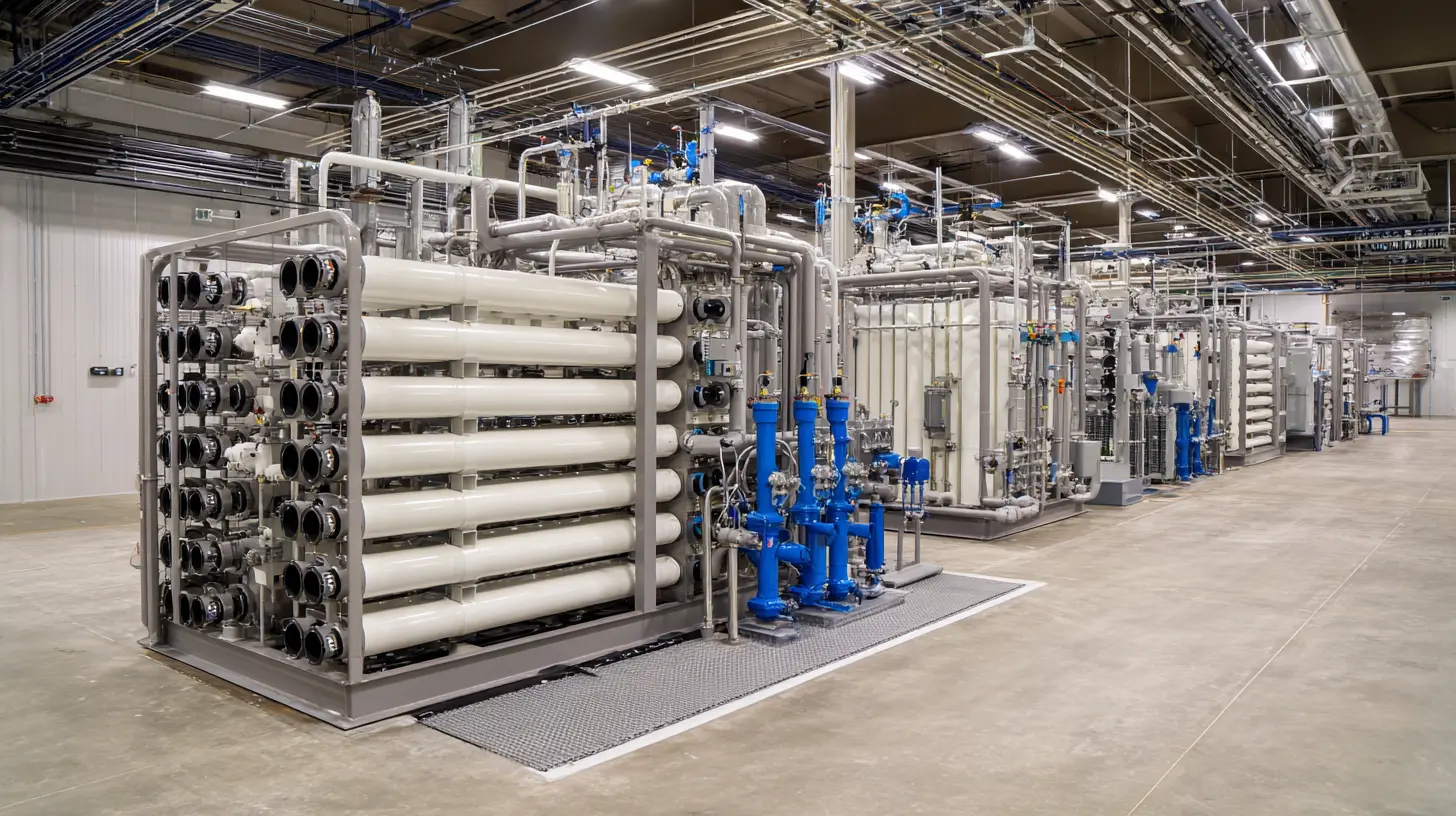
Reverse osmosis (RO) is widely used to reduce dissolved substances in water across commercial and industrial facilities. However, RO membranes require suitable operating conditions and appropriate pretreatment to maintain performance. One of the most prevalent operational challenges is membrane scaling.
Scaling occurs when dissolved mineral ions become concentrated near the membrane surface and precipitate once their solubility limits are exceeded. If scaling is not properly controlled, it leads to flux decline, elevated feed pressures, premature membrane failure, and costly operational shutdowns.
What Is RO Membrane Scaling?
During reverse osmosis, water passes through a semi-permeable membrane while dissolved salts and minerals are rejected. As pure water (permeate) is extracted, the concentration of sparingly soluble mineral salts increases dramatically in the brine (concentrate) stream.
Concentration polarization further elevates mineral concentration right at the membrane surface compared to the bulk solution. When the saturation index exceeds 100%, crystallization nuclei form on the membrane surface, creating a hard, adherent mineral crust that restricts water passage.
What Causes RO Membrane Scaling?
1. High Hardness (Calcium and Magnesium)
Calcium and magnesium ions are abundant in raw water across the Middle East. When paired with carbonate, sulfate, or phosphate ions under high recovery, compounds like calcium carbonate (CaCO&sub3;) and calcium sulfate (CaSO&sub4;) readily precipitate.
2. Silica (SiO&sub2;) Supersaturation
Silica scaling is notoriously difficult to remove once formed. Because silica solubility is strongly pH- and temperature-dependent, operating above 120–150 ppm reactive silica in the concentrate stream can lead to irreversible glassy scale formation.
3. Operating at Excessive Recovery Rates
Recovery represents the percentage of feed water converted into permeate. Pushing recovery beyond the thermodynamic saturation threshold forces minerals out of solution into crystal deposits.
4. Inadequate Pretreatment and Suboptimal Antiscalant Dosing
If media filtration, cartridge filtration, or antiscalant dosing are improperly sized, malfunctioning, or using incorrect chemicals, the RO membrane becomes directly exposed to supersaturated scaling conditions.
Warning Signs of RO Membrane Scaling
Detecting scaling early is critical because cleaning membranes when scaling is mild is far more effective than trying to salvage heavily fouled elements. Key indicators to monitor daily include:
- Decrease in Normalized Permeate Flow: A drop of 10–15% in normalized flux is a primary warning sign.
- Increase in Feed Pressure / Differential Pressure: A 15% increase in pressure drop across pressure vessels indicates flow channel restriction.
- Decrease in Salt Rejection (Increase in Permeate Conductivity): As scale punctures or deforms membrane active layers, dissolved salts pass through.
How Can Scaling Risk Be Reduced?
Effective prevention relies on three integrated pillars:
- Engineered Pretreatment: Incorporating multimedia filtration, water softening, or ultrafiltration upstream of the RO unit protects membranes against suspended solids and hardness. Learn about our RO Polishing and Ultrafiltration Systems.
- Precision Antiscalant Dosing: Antiscalants interfere with crystal nucleation and retard crystal growth. Wolgan formulates specialized RO antiscalants and chemical treatment programmes tailored to Gulf groundwater and seawater chemistries.
- Scheduled Cleaning-in-Place (CIP): Performing chemical cleanings with appropriate acidic (for inorganic scale) and alkaline (for organics/silica) cleaning solutions restores flux before permanent membrane damage occurs.
Summary & Next Steps
Maintaining membrane health requires proactive feed-water monitoring and balanced operational discipline. For organizations experiencing pressure spikes, flux decline, or seeking optimization for their RO plants, Wolgan provides complete audits, membrane autopsy, and tailored maintenance support.
Water Treatment Solutions
Discover Wolgan's tailored engineering, turnkey equipment supply, commissioning, and maintenance contracts across Qatar and the UAE.